About Urinalysis Reagent Strips
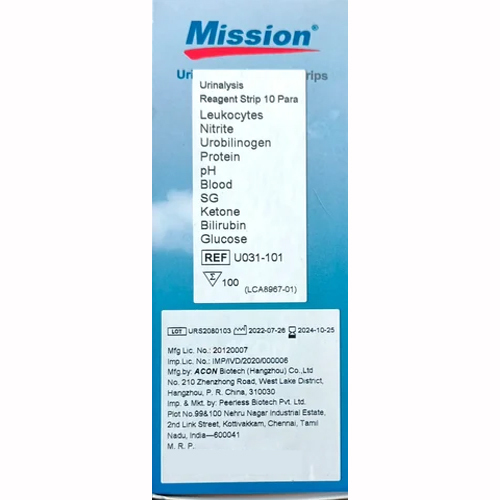
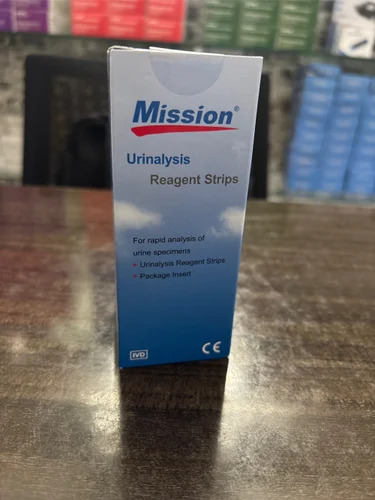
We are providing a broad selection of Urinalysis Reagent Strips to our customers in an effort to strengthen our position in the market. In less than a minute, they must be able to spot signs of infection, damage to the urinary tract, kidney and liver illness, the breakdown of fat, diabetes, and more. In a typical urinalysis, Urinalysis Reagent Strips are used to identify pathological abnormalities in a patient's urine. They include a variety of chemical pads or reagents that interact with particular elements in urine to change the color in a way that may be observed visually or analyzed using a urine analyzer.
Efficient Diagnostic ScreeningUrinalysis Reagent Strips provide a fast and reliable method for screening multiple health indicators from urine samples. Their efficiency aids hospitals and clinicians in early disease detection and patient monitoring, enhancing overall healthcare outcomes.
Simplified Testing ProcessWith a straightforward dip-and-read approach, these reagent strips allow medical professionals and caregivers to conduct routine urine tests without specialized training. Their user-friendly design reduces testing complexities in busy hospital environments.
FAQ's of Urinalysis Reagent Strips:
Q: How are urinalysis reagent strips used in a hospital setting?
A: Medical professionals simply dip the strip into a fresh urine sample and then compare the resulting color changes to the reference chart provided. This process delivers results within minutes, making it ideal for swift diagnosis in hospitals.
Q: What medical conditions can be detected using urinalysis reagent strips?
A: These strips help identify a range of health concerns, including urinary tract infections, diabetes (by detecting glucose and ketones), kidney diseases (by checking for protein and blood), and other metabolic or systemic disorders.
Q: When should patients undergo urine testing with reagent strips?
A: Urine testing is recommended for patients displaying symptoms like unusual urination patterns, abdominal pain, unexplained fever, or as part of routine medical checkups and ongoing disease management.
Q: Where are urinalysis reagent strips most commonly used?
A: They are predominantly utilized in hospitals, clinics, diagnostic centers, and occasionally in home care settings under medical supervision throughout India.
Q: What is the process involved in using these reagent strips for medical diagnosis?
A: The process involves collecting a urine sample, immersing the strip briefly, allowing it to react, and interpreting the color changes according to the manufacturer's chart to identify any anomalies.
Q: What are the main benefits of using urinalysis reagent strips for patients?
A: The strips provide the benefits of early detection, non-invasive testing, quick results, and cost-effectiveness. These advantages support timely medical intervention and efficient patient management in Indian healthcare facilities.




 Send Inquiry

 Send Inquiry

